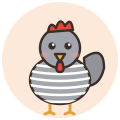
At a glance the quick version
Wikipedia: cock 3.5 to 4 kg, hen 2.5 to 3 kg; bantams about 1.1 kg (cock) and 0.9 kg (hen). Tractor Supply: roosters 8 to 9.5 lb (about 3.6 to 4.3 kg), hens 6.5 to 8 lb (about 2.9 to 3.6 kg).
Looks how to spot one
Soft, fairly close feathering; shanks lightly feathered in the French type and clean in the British type
A solid, medium-to-large utility bird with a single comb, red or orange eyes and a sturdy frame. Its big claim to fame is the egg: hens lay very dark brown eggs in shades from reddish mahogany to deep chocolate.14
Personality what they are like
Generally calm, quiet and friendly, getting along well with the rest of the flock. Marans are alert birds that watch for danger, and many prefer being near people to being held for long spells.34
Daily activity how busy a day looks
Active foragers that enjoy free ranging, but they also adapt well to living in a run.34
Grooming and care the hands-on bits
Chickens keep their own feathers in order by preening and dust bathing, so the main jobs are a dry dust-bath area, clean dry bedding, daily flock checks and regular egg collection. Keep footing dry and check the legs of feathered-shank birds so mud does not build up. Tractor Supply suggests about 4 sq ft (0.37 m²) of coop space per bird. Hens typically lay around 150 to 200 eggs a year.35
Home where they are happiest
A secure, dry, well-ventilated but draught-free coop with perches and nest boxes, plus a fenced run with a patch of dry soil for dust bathing. The RSPCA suggests about 1 m² of indoor space per bird where possible.56
Food basics what goes in the bowl
A complete commercial poultry ration is the base: chick starter, then grower, then layer feed once hens begin laying. Provide insoluble grit, oyster shell as extra calcium for laying hens, and constant clean water.56
Company who they like around
Chickens are flock animals that forage, roost and dust bathe together, so keep at least three birds that get along.5
The story where it all began
Marans grew out of local farm chickens around the town of Marans, mixed with birds landed by visiting ships at La Rochelle and later with Croad Langshan blood. They were first shown in La Rochelle in 1914, a breed club followed in 1929 and a French standard in 1931. Eggs reached Britain around 1929 and the breed became a respected dual-purpose utility fowl there.12
Fun facts for the dinner table
- 1
Marans are nicknamed chocolate eggers because of the deep brown colour of their eggs; Black Copper and Silver Cuckoo birds tend to lay the darkest ones.4
- 2
The breed was first exhibited in 1914 in La Rochelle, simply labelled 'poule du pays', meaning local chicken.1
- 3
Cuckoo Marans hens crossed with suitable unbarred cockerels give sex-linked chicks, where the males can be picked out by a white spot on the head.2
- 4
Silver Cuckoo is the most common Marans colour in North America.4
Recognised by the official bits
- The Poultry Club of Great Britain
- Standardised breed, classed as soft feather heavy.2
- American Poultry Association
- Oklahoma State lists White, Wheaten and Black Copper as APA-recognised; Tractor Supply lists Black, Black Copper, Wheaten and White.4
- French breed standard
- First French standard drawn up in 1931 after a breed society formed in 1929; French colours include white, wheaten, silver cuckoo, golden cuckoo, black, copper-black, silver-black, copper-blue, black-tailed buff and Columbian.1
The care rhythm Furry Diary remembers it for you
A typical home-care rhythm for a Marans. It is our own starting plan, not a vet's advice, and you can change every line in the app.
- Fresh food and waterevery day
- Egg collectevery day
- Coop spot cleanevery day
- Coop full cleanFresh bedding and nest boxesevery month
- Mite checkLook under the wings and around the ventevery 2 weeks
- Dust bath checkKeep a dry dust bath spotevery week
- Free rangeDaily time outside in a safe runevery day
- Vet check-upFind a vet who sees poultryevery year
You might also like
 Welsummer
Like what we are building? Buy us a coffee.
The breed atlas is free for everyone, with a source on every fact, and it will never show ads. If it helped you, a small tip keeps the research going. Any amount is lovely, and no is a perfectly fine answer too.
Where this comes from
Every breed page shows where each fact comes from. If we got something wrong, sorry, we are pet people, not a science magazine. Tell us at [email protected] and we will fix it.
- Marans chicken - Wikipedia en.wikipedia.orgused for origin, history, French standard colours, weights, egg colour, shanks
- Marans - The Poultry Club of Great Britain poultryclub.orgused for classification, ancestry, UK import, sex-linked crosses
- Marans Breed Guide - Tractor Supply tractorsupply.comused for temperament, weights, lifespan, egg numbers, coop space, care
- Marans Chickens - Oklahoma State University Breeds of Livestock breeds.okstate.eduused for APA varieties, egg colour, hardiness, laying rate
- Keeping chickens as pets - RSPCA rspca.org.ukused for general chicken housing, social needs, feeding
- Care of the Backyard Chicken - Lafeber Vet lafeber.comused for general chicken space, perches, diet stages
Checked 2026-09-30. Text is written in our own words from these sources.