Strawberry Finch
Amandava amandava
Also called Red Avadavat, Red Munia, Tiger Finch, Red Waxbill, Bombay Avadavat
From South and Southeast Asia, from Pakistan, India and Nepal to Myanmar, Thailand, Cambodia, southern China, Java, Bali and the Lesser Sunda Islands. Introduced populations exist in several countries.12
At a glance the quick version
Looks how to spot one
Feathered; tiny waxbill with a seasonal red bill
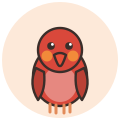
A very small finch that changes outfit through the year. In breeding colours the cock turns bright strawberry red, sprinkled with little white dots on the wings and flanks, with a dark eye stripe and a black tail. Hens, and cocks out of season, are a soft reddish-brown with a cream throat but keep the red rump, and the bill itself shifts from dark to red with the seasons.12
Personality what they are like
A quiet, peaceful finch that mixes well with other gentle birds. It can be a little bossy with birds of its own species and colour, especially near the nest.1
Daily activity how busy a day looks
Active and fond of climbing through grasses. A planted outdoor aviary or large indoor flight suits them better than a small cage.1
Grooming and care the hands-on bits
Self-grooming. Offer frequent baths; claws may need occasional trimming, as captive birds do less of the climbing that wears them down in the wild.1
Home where they are happiest
A well-planted aviary or large indoor flight kept above about 12 C, with sunlight and bathing water.1
Food basics what goes in the bowl
Small grass and millet seeds and sprouted seed, plus small live food such as fruit flies, ant pupae, termites and freshly moulted mealworms.12
Company who they like around
Sociable and happy in small flocks outside the breeding season. Single pairs breed best; if kept as a colony, use at least three pairs with an even sex ratio.12
The story where it all began
Linnaeus described the bird in 1758, and it was moved to its own genus Amandava in 1836. Both 'amandava' and 'avadavat' come from Ahmedabad in India, the city from which the birds were once exported into the cage-bird trade.2
Fun facts for the dinner table
- 1
The names 'avadavat' and 'amandava' both come from the Indian city of Ahmedabad.2
- 2
The bill turns red around May and darkens again in late autumn, following day length.2
- 3
Out of breeding colour, cocks can still be told from hens by the white spots on the feathers above the tail.1
- 4
In flight, flocks keep in touch with a low 'pseep' call.2
Recognised by the official bits
- IUCN Red List
- Assessed as Least Concern.2
The care rhythm Furry Diary remembers it for you
A typical home-care rhythm for a Strawberry Finch. It is our own starting plan, not a vet's advice, and you can change every line in the app.
- Fresh food and waterevery day
- Cage linerevery 2 days
- Full cleanevery week
- Bath offerA shallow dish or gentle mistevery 3 days
- Nails checkevery month
- Toy rotationevery 2 weeks
- Out-of-cage timeAbout an hour a day, if tameevery day
- Vet check-upevery year
Like what we are building? Buy us a coffee.
The breed atlas is free for everyone, with a source on every fact, and it will never show ads. If it helped you, a small tip keeps the research going. Any amount is lovely, and no is a perfectly fine answer too.
Where this comes from
Every breed page shows where each fact comes from. If we got something wrong, sorry, we are pet people, not a science magazine. Tell us at [email protected] and we will fix it.
- Red Avadavat (Strawberry Finch) - Amandava amandava (FinchInfo) finchinfo.comused for names, range, size, weight, lifespan, sexing, temperament, housing, diet, social needs
- Red avadavat - Wikipedia en.wikipedia.orgused for range, plumage, subspecies, history, name origin, status, facts
Checked 2026-09-30. Text is written in our own words from these sources.