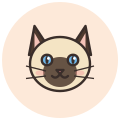
At a glance the quick version
About 8-10 lb (3.6-4.5 kg); sources give no split by sex.
Coat and looks how to spot one
short, glossy, close-lying coat with little undercoat; short kinked tail
A slender, medium-sized cat with a rectangular outline and a rump set slightly higher than the shoulders. The short coat has hardly any undercoat and lies sleek against the body with a natural shine. Eyes are a vivid blue, and the tail is a short, kinked bob of at least three vertebrae, no longer than a quarter of the body length.12
Personality what they are like
Friendly, affectionate and loyal to its people, yet generally quiet. It is curious and clever, can learn tricks, and is often compared to a dog for the way it follows and bonds with its family.21
Daily activity how busy a day looks
Active and athletic; enjoys climbing, jumping and regular play despite its short tail.21
Grooming and care the hands-on bits
Very easy. The short, single-layer coat needs only an occasional brush.2
Food basics what goes in the bowl
Like every cat, an obligate carnivore that does best on a complete, balanced cat food suited to its age and activity level, with fresh water always available.
Company who they like around
Sociable and people-oriented; usually gets along with children and other pets.2
The story where it all began
Tradition holds that King Chulalongkorn of Siam gave around 200 royal cats to Russia's Tsar Nicholas II, and many of them had kinked tails like today's breed. Russian breeders developed these and other Southeast Asian bobtails into a pointed breed, first known as the Thai Bobtail. A standard was drafted in 1994, and WCF recognised it under the name Mekong Bobtail in 2004.12
Fun facts for the dinner table
- 1
Its forebears were regarded as royal Siamese cats and 'guardians of temples'.1
- 2
By standard, the kinked tail must have at least three vertebrae but be no longer than a quarter of the cat's body length.2
- 3
Only pointed colours are allowed, and white markings are not accepted.1
- 4
Until 2004 the breed was known as the Thai Bobtail; WCF renamed it Mekong Bobtail when recognising it.1
Recognised by the official bits
- WCF
- Recognised August 2004, when the name changed from Thai Bobtail to Mekong Bobtail; standard written by Russian felinologist O. S. Mironova in December 19941
- FIFe
- Not listed on the FIFe breeds page3
The care rhythm Furry Diary remembers it for you
A typical home-care rhythm for a Mekong Bobtail. It is our own starting plan, not a vet's advice, and you can change every line in the app.
- Brushingevery week
- Nail trimevery 3 weeks
- Teeth brushingDaily brushing is idealevery 2 days
- Litter scoopevery day
- Litter changeevery week
- PlayDaily playevery day
- Flea, tick and worm protectionSchedule as your vet recommendsas your vet recommends
- Vet check-upSenior years usually start around age 11every year
You might also like
 Siamese
 Thai
Thai Japanese Bobtail
 Kurilian Bobtail
Like what we are building? Buy us a coffee.
The breed atlas is free for everyone, with a source on every fact, and it will never show ads. If it helped you, a small tip keeps the research going. Any amount is lovely, and no is a perfectly fine answer too.
Where this comes from
Every breed page shows where each fact comes from. If we got something wrong, sorry, we are pet people, not a science magazine. Tell us at [email protected] and we will fix it.
- Wikipedia: Mekong Bobtail en.wikipedia.orgused for other names, origin, history, WCF recognition, weight, coat, colours, tail
- PetGuide: Mekong Bobtail petguide.comused for weight, height, lifespan, coat, colours, temperament, activity, grooming
- FIFe: Breeds fifeweb.orgused for recognition check
Checked 2026-09-30. Text is written in our own words from these sources.