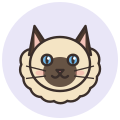
Dressed for the masked ball.
Neva Masquerade
Felis catus
Also called NEM (FIFe code), Colourpoint Siberian, Siberian colourpoint, Neva
From Russia, associated with Saint Petersburg (named after the River Neva). A colourpoint sister breed of the Siberian, developed in Russia in the 1970s-80s.12
At a glance the quick version
Sources disagree. Wikipedia gives 4.5-9 kg for adult Neva Masquerades overall. Siberian registry figures (same body type): CFA 12-18 lb males (about 5.4-8.2 kg) and 8-12 lb females (about 3.6-5.4 kg); GCCF 17-26 lb males (about 7.7-11.8 kg) and 13-17 lb females (about 5.9-7.7 kg). Ranges above span the cited figures. Females are clearly smaller than males.
GCCF figure for the Siberian ('12-15 years or more'); no Neva-specific figure found
Coat and looks how to spot one
semi-long, dense, water-repellent triple coat with colourpoint pattern
A sturdy, well-muscled cat with a slightly rectangular body, broad chest, strong legs and big round paws with tufts between the toes. The head is softly rounded and slightly longer than wide, with full cheekbones, medium ears tipped with tufts, and large, slightly oval eyes that are always blue. The coat is semi-long with three layers of hair; the top layer sheds water and feels a little coarse, while the thick undercoat stands away from the body. In winter it grows a full ruff, bib and fluffy 'trousers'; the summer coat is much shorter. Darker colour sits on the face mask, ears, legs and tail, like a masquerade mask.521
Personality what they are like
Warm, bright and devoted to its family. A Neva likes to be near its people and often trails them from room to room without being pushy about it. It is curious and enjoys a game, yet generally stays quiet and even-tempered, preferring a deep purr to loud meowing. Fans of the Siberian family often describe it as having some dog-like loyalty.236
Daily activity how busy a day looks
Moderate to high. Enjoys daily play sessions and is a strong, agile jumper, so tall cat trees and high perches suit it well.617
Grooming and care the hands-on bits
Comb or brush a few times a week, paying attention to the belly, tail and hind legs where tangles form. Shedding is heavy in spring and autumn, when daily combing helps. The water-resistant coat seldom needs a bath.463
Home where they are happiest
Adapts well to family homes. Provide vertical space for climbing and jumping. Its dense coat handles cool conditions well.657
Food basics what goes in the bowl
A complete, balanced commercial cat food suited to age and activity. As an obligate carnivore it needs a meat-based diet with nutrients such as taurine. Slow-maturing, so growth continues into the early adult years.86
Company who they like around
Very people-focused and happiest with company for much of the day; another pet or a household where someone is often home suits it. Generally gets on well with families and other animals.241
The story where it all began
The Neva Masquerade grew out of the Siberian, a native Russian forest cat whose history is traced back roughly a thousand years. When Russian breeders began organised work on the Siberian in the 1980s, colourpoint cats of the same sturdy type were already appearing, especially around Saint Petersburg (then Leningrad), and they were developed side by side with the traditional colours during the 1970s and 80s. Wikipedia describes the colourpoint look as coming from crosses between Siberian landrace cats and Asian colourpointed cats. The breed name joins the River Neva, which runs through Saint Petersburg, with the mask-like shading on the face. From the late 1980s to the early 2000s these cats spread to Western Europe and North America; TICA records that the first colourpoint Siberians were imported to the United States in 1997, with the first American colourpoint litter born in 1998. Registries split over how to handle them: CFA and TICA keep colourpoints within the Siberian, while FIFe made the Neva Masquerade a separate sister breed in 2011, and WCF also registers it separately.12637
Fun facts for the dinner table
- 1
The name joins the River Neva in Saint Petersburg with the cat's 'masquerade' face mask.2
- 2
Every Neva Masquerade has blue eyes, and the FIFe standard says the deeper the blue, the better.5
- 3
Its coat changes with the seasons: a full ruff, bib and 'knickerbockers' in winter, and a much shorter coat in summer.2
- 4
It is a slow developer and may not reach its full adult body until about five years old.1
- 5
The colourpoint pattern comes from the same gene variant found in the Siamese.1
- 6
FIFe recognised the Neva Masquerade as its own breed in 2011, while CFA and TICA still treat it as a Siberian colour.9
- 7
CFA sums up the Siberian family character as '90% placid and 10% mischief'.3
- 8
Its close relative, the Siberian, is known as the national cat of Russia.7
Recognised by the official bits
- FIFe
- Recognised as a separate sister breed of the Siberian in 2011; Category 2, code NEM, sharing one standard with the Siberian (SIB/NEM)10
- WCF
- Registered as a separate breed7
- ACF, CCA-AFC, CCC of A
- Standard recognised as a breed1
- CFA
- Not a separate breed; colourpoints (seal, blue, flame, cream, tortie, blue-cream and lynx points) are accepted within the Siberian, which CFA accepted for registration in 2000 and for championship in 20073
- TICA
- Not a separate breed; pointed colours are accepted within the Siberian, which entered TICA's New Breed programme in 1992 and gained championship status in 19966
- GCCF
- Colourpoint is listed among the accepted colours of the Siberian (Section 2, Semi Longhair, Group 3); Wikipedia reports GCCF recognition for registration11
The care rhythm Furry Diary remembers it for you
A typical home-care rhythm for a Neva Masquerade. It is our own starting plan, not a vet's advice, and you can change every line in the app.
- Brushingevery 2 days
- Deshedding springBrush more while sheddingevery day
- Nail trimevery 3 weeks
- Teeth brushingDaily brushing is idealevery 2 days
- Litter scoopevery day
- Litter changeevery week
- PlayAbout 30 minutes of play a dayevery day
- Flea, tick and worm protectionSchedule as your vet recommendsas your vet recommends
- Vet check-upSenior years usually start around age 11every year
You might also like
 Siberian
 Ragdoll
 Birman
 Himalayan
 Norwegian Forest Cat
Like what we are building? Buy us a coffee.
The breed atlas is free for everyone, with a source on every fact, and it will never show ads. If it helped you, a small tip keeps the research going. Any amount is lovely, and no is a perfectly fine answer too.
Where this comes from
Every breed page shows where each fact comes from. If we got something wrong, sorry, we are pet people, not a science magazine. Tell us at [email protected] and we will fix it.
- Wikipedia: Neva Masquerade en.wikipedia.orgused for history, weight, colours, maturity, recognition list, temperament note
- FIFe: Neva Masquerade fifeweb.orgused for origin, recognition, name, appearance, coat, temperament
- CFA: Siberian cfa.orgused for colourpoint acceptance, weight, temperament, grooming, US history
- GCCF: Siberian gccfcats.orgused for weight, lifespan, grooming, colourpoint colour, social needs
- FIFe breed standard SIB/NEM (PDF) fifeweb.orgused for body, head, eyes, coat, allowed colours, size
- TICA: Siberian tica.orgused for pointed acceptance, US colourpoint history, temperament, grooming, jumping
- Wikipedia: Siberian cat en.wikipedia.orgused for WCF/GCCF registration, national cat of Russia, background
- Wikipedia: Cat en.wikipedia.orgused for diet basics
- fifeweb.org fifeweb.org
- fifeweb.org fifeweb.org
- gccfcats.org gccfcats.org
- FIFe: Breeds fifeweb.orgused for category and recognition
Checked 2026-09-30. Text is written in our own words from these sources.