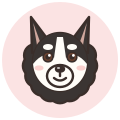
Sakhalin Husky
Also called Karafuto Ken, Sakhalin Laika, Gilyak Laika, Gilyak Sled Dog
From Sakhalin Island, today part of Russia and historically also linked with Japan; developed by the Nivkh people.1
At a glance the quick version
Range given by Wikipedia for the landrace as a whole; no official standard exists.
Coat and looks how to spot one
double coat
A thick double coat made for harsh northern winters, on a strong, well-muscled sled dog frame.1
Personality what they are like
A calm, clever and loyal dog that is friendly towards people and other dogs. It has a strong instinct to chase and plenty of energy for long days of work.1
Daily activity how busy a day looks
Very high. Bred to pull sleds over long distances, it needs a lot of daily exercise.1
Grooming and care the hands-on bits
The dense double coat benefits from regular brushing, especially when the undercoat is shedding.1
Home where they are happiest
Suited to cold climates and active homes with plenty of outdoor space.1
Company who they like around
Traditionally lived and worked as part of a team of dogs and gets on well with other dogs.1
The story where it all began
The Nivkh people of Sakhalin bred these dogs over many centuries for sledding and hunting. The breed took part in Robert Falcon Scott's Antarctic expedition of 1910-1913 and later in Japan's Antarctic research. Numbers fell sharply during the 20th century and it is now very rare.1
Fun facts for the dinner table
- 1
Two Sakhalin Huskies, Taro and Jiro, became famous in Japan after surviving almost a year alone in Antarctica following the 1958 expedition.1
- 2
Taro went on to live until 1970.1
- 3
A single dog could haul more than 70 kg of cargo over 100-150 km at around 10-11 km/h.1
- 4
Black coats were favoured because the dogs were easier to spot against the snow.1
Recognised by the official bits
- None
- A rare landrace with no official breed standard from a major kennel club.1
How many About 7 known dogs, all owned by musher Sergei Lyubykh (Wikipedia also cites around 20 on Sakhalin in 1989)1
The care rhythm Furry Diary remembers it for you
A typical home-care rhythm for a Sakhalin Husky. It is our own starting plan, not a vet's advice, and you can change every line in the app.
- BrushingDaily during heavy sheddingevery 3 days
- Double coats insulate against cold and heat, so shaving is not recommended
- Bathevery 10 weeks
- Nail trimSooner if you hear clicking on the floorevery month
- Ear checkevery 2 weeks
- Teeth brushingDaily brushing is idealevery 2 days
- ExerciseDaily walks and playevery day
- Flea, tick and worm protectionSchedule as your vet recommendsas your vet recommends
- Vet check-upSenior years usually start around age 7every year
You might also like
 Alaskan Malamute
 Siberian Husky
 Hokkaido
Like what we are building? Buy Archy a bone.
All of this is free for everyone, with a source on every fact, and it will never show ads. It was a big job to build, so if it helped you, buy Archy a bone. Any amount is lovely, and no is a perfectly fine answer too.
Archy is our Australian Cattle Dog and chief taste tester. Tips go to 4V3D OÜ, the small family studio behind Furry Diary.
Where this comes from
Every breed page shows where each fact comes from. If we got something wrong, sorry, we are pet people, not a science magazine. Tell us at [email protected] and we will fix it.
- Wikipedia: Sakhalin Husky en.wikipedia.orgused for all fields (secondary; no registry standard exists)
Checked 2026-09-30. Text is written in our own words from these sources.