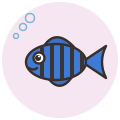
At a glance the quick version
Looks how to spot one
Slim, elongated mbuna
A slender rock cichlid with sharp, single-pointed teeth and dark vertical bars that run up into the dorsal fin.23
Personality what they are like
Lively and full of character; males claim a cave and defend it firmly against their own kind, so this is a fish for a busy mbuna community rather than a calm tank.23
Daily activity how busy a day looks
An active swimmer that patrols rockwork all day; males hold territories near caves while females roam mid-water.31
Grooming and care the hands-on bits
Hard, alkaline water with regular water changes; many caves and stacked rocks to break up sight lines.21
Home where they are happiest
At least 100 x 30 cm base (about 90 litres), 23 to 29 C, pH about 7.5 to 8.5 and 10 to 25 dGH, with plenty of rockwork.213
Food basics what goes in the bowl
Omnivore that grazes rocks in the wild; feed mostly vegetable-based foods such as spirulina flakes plus some small live or frozen foods.21
Company who they like around
Keep one male with three to six females, alongside other mbuna of similar temperament; a well-stocked tank spreads out attention.2
The story where it all began
Albert Günther described the species in 1894 from Lake Malawi material, first placing it in Hemichromis. It later passed through Paratilapia before settling in Cynotilapia, and it has been kept in the hobby in many collection-point forms.31
Fun facts for the dinner table
- 1
The genus name points to its sharp, conical single-cusped teeth, which set it apart from other Malawi rock cichlids.3
- 2
Males graze the film of algae and tiny animals on rocks, while females often pick plankton from open water.1
- 3
Each wild population has its own look; some have a bright yellow dorsal fin and others have none at all.3
- 4
Females brood about 15 to 30 eggs in their mouths for up to three weeks.2
Recognised by the official bits
- IUCN Red List
- Least Concern (assessed 22 June 2018)1
- Taxonomy
- Described by Günther in 1894 as Hemichromis afer; a rock-dwelling mbuna3
The care rhythm Furry Diary remembers it for you
A typical home-care rhythm for a Afra Cichlid. It is our own starting plan, not a vet's advice, and you can change every line in the app.
- FeedingSmall amounts once or twice a dayevery day
- Temperature checkevery day
- Water changeAbout 25% of the waterevery week
- Water testevery week
- Glass cleanevery week
- Filter rinseRinse in old tank water, never tap waterevery month
You might also like
 Red Zebra Cichlid
 Cobalt Blue Zebra Cichlid
 Demasoni Cichlid
Like what we are building? Buy Archy a bone.
All of this is free for everyone, with a source on every fact, and it will never show ads. It was a big job to build, so if it helped you, buy Archy a bone. Any amount is lovely, and no is a perfectly fine answer too.
Archy is our Australian Cattle Dog and chief taste tester. Tips go to 4V3D OÜ, the small family studio behind Furry Diary.
Where this comes from
Every breed page shows where each fact comes from. If we got something wrong, sorry, we are pet people, not a science magazine. Tell us at [email protected] and we will fix it.
- FishBase species summary: Cynotilapia afra fishbase.seused for distribution, size, water parameters, diet, IUCN status, taxonomy
- Seriously Fish: Cynotilapia afra seriouslyfish.comused for aquarium care, tank size, behaviour, diet, colours, breeding
- Wikipedia: Cynotilapia afra en.wikipedia.orgused for common names, colours, history, fun facts (secondary)
Checked 2026-09-30. Text is written in our own words from these sources.