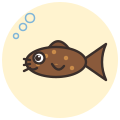
Has a beard, cleans the tank.
Bristlenose Pleco
Ancistrus spp. (aquarium strains are often sold as A. cirrhosus or A. dolichopterus, but their exact identity is often unclear)
Also called Bristlenose catfish, Bushynose pleco, Bushymouth catfish, Ancistrus
From Freshwater rivers and streams of South America, especially the Amazon basin, with a few species in Panama and Trinidad123
At a glance the quick version
Looks how to spot one
Armoured suckermouth catfish
A flattened, bony-plated catfish with a downward-facing sucker mouth for clinging and grazing. Adult males grow a crown of soft, branching tentacles on the snout and head, which gives the fish its name; females have only a few small ones along the edge of the snout, or none. Males also carry small hooked spines on the cheeks that they can flip outward.14
Personality what they are like
Calm and easygoing with other fish, spending much of its time grazing on surfaces or resting in caves. Males can be territorial toward other bristlenoses or similar-shaped catfish, particularly around a favourite cave.15
Daily activity how busy a day looks
Mostly active at dusk and after dark, moving slowly over glass, rocks and wood. Appreciates some water flow, as many species come from flowing streams.16
Grooming and care the hands-on bits
Keep water at about 23 to 27 C with pH around 6.0 to 8.0 and soft to moderately hard water. Good filtration with some current suits it, and caves or hollow pieces of wood give it places to hide and breed.13
Home where they are happiest
Wikipedia suggests a tank of at least about 95 litres (25 US gallons), and FishBase gives a minimum tank length of 80 cm for the larger A. dolichopterus. Provide a sandy or fine gravel bottom, driftwood, rocks and caves.13
Food basics what goes in the bowl
A grazer of algae, biofilm and detritus. Supplement with sinking algae wafers and blanched vegetables such as courgette or cucumber, plus occasional small frozen foods. Despite a popular belief, there is no scientific evidence that bristlenoses actually digest wood.15
Company who they like around
Gets along with most peaceful community fish. Can be kept singly or in groups in a larger tank, ideally with one cave per male to prevent squabbles.15
The story where it all began
The first species of the genus was described in the 19th century, including Ancistrus cirrhosus by Achille Valenciennes in 1836 and Ancistrus dolichopterus by Rudolf Kner in 1854. The genus has since grown to more than 100 recognised species spread across tropical South America. Because it stays small, eats algae and breeds readily in captivity, the bristlenose became one of the most popular suckermouth catfish for home aquariums. The fish in the hobby today are mostly captive-bred, and their exact species identity is often uncertain, which is why they are usually just sold as 'bristlenose' or Ancistrus sp. Breeders have also established albino forms.4615
Fun facts for the dinner table
- 1
The genus name comes from an Ancient Greek word for a hook, referring to the curved spines on the fish's cheeks.1
- 2
Bristlenose dads do all the parenting: males guard the eggs in a cave and clean them with their fins and mouth until they hatch.1
- 3
A female lays roughly 20 to 200 sticky eggs on the ceiling of a cave or hollow.1
- 4
Ancistrus are unusual among vertebrates for using an X0 sex-determination system, something mostly seen in insects and other arthropods.1
- 5
Three Ancistrus species live in caves and have pale bodies and reduced eyes.1
- 6
Like many armoured catfish, bristlenoses can gulp air when oxygen in the water runs low.2
- 7
The specific name cirrhosus means 'curled', a nod to the bushy tentacles on the snout.4
Recognised by the official bits
- IUCN Red List
- Ancistrus cirrhosus and Ancistrus dolichopterus both assessed as Least Concern3
- Taxonomy
- Genus Ancistrus contains over 100 valid species, the largest genus in the tribe Ancistrini1
The care rhythm Furry Diary remembers it for you
A typical home-care rhythm for a Bristlenose Pleco. It is our own starting plan, not a vet's advice, and you can change every line in the app.
- Feedingevery day
- Temperature checkevery day
- Water changeAbout 25% of the waterevery week
- Water testevery week
- Filter rinseevery month
You might also like
 Common Pleco
 Otocinclus
 Clown Pleco
Like what we are building? Buy us a coffee.
The breed atlas is free for everyone, with a source on every fact, and it will never show ads. If it helped you, a small tip keeps the research going. Any amount is lovely, and no is a perfectly fine answer too.
Where this comes from
Every breed page shows where each fact comes from. If we got something wrong, sorry, we are pet people, not a science magazine. Tell us at [email protected] and we will fix it.
- Wikipedia: Ancistrus en.wikipedia.orgused for distribution, size, lifespan, diet, breeding, care, colours, fun facts
- FishBase: Ancistrus cirrhosus fishbase.seused for size, range, air breathing
- FishBase: Ancistrus dolichopterus, Bushymouth catfish fishbase.seused for size, water parameters, tank size, IUCN status
- Wikipedia: Ancistrus cirrhosus en.wikipedia.orgused for description history, tentacles, etymology
- Seriously Fish: Ancistrus dolichopterus seriouslyfish.comused for diet, behaviour, identity confusion
- Wikipedia: Ancistrus dolichopterus en.wikipedia.orgused for description history, habitat
Checked 2026-09-30. Text is written in our own words from these sources.