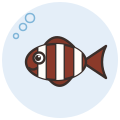
Not furry, but we like them anyway.
Cinnamon Clownfish
Amphiprion melanopus
Also called Fire clownfish, Red and black anemonefish, Black-backed anemonefish, Blackback anemonefish, Dusky anemonefish
From Western Pacific: eastern Indonesia, the south-eastern Philippines, Papua New Guinea, eastern Queensland and the Coral Sea, the Solomon Islands, Vanuatu, New Caledonia, Palau and Micronesia12
At a glance the quick version
Looks how to spot one
Personality what they are like
Similar in character to the tomato clownfish: confident and territorial once settled in, and keen to guard its home.32
Daily activity how busy a day looks
Stays close to its host anemone, most often a bubble-tip, or to a favourite spot in the tank.12
Grooming and care the hands-on bits
A fully marine reef fish that accepts flakes, pellets and frozen foods. It can become territorial once it has settled into a tank, so tank mates are best chosen with that in mind.23
Home where they are happiest
A saltwater aquarium with rockwork or a host anemone. In the wild it lives in lagoons and on outer reefs at about 1 to 18 m, usually with the bubble-tip anemone (Entacmaea quadricolor).12
Food basics what goes in the bowl
An omnivore. Wild fish eat planktonic copepods, small crustaceans and algae; in aquariums it takes flakes, brine shrimp, mysid shrimp, algae and pellets.12
Company who they like around
Lives in small size-ranked groups led by one breeding female and one breeding male, and forms close pairs when breeding.21
The story where it all began
Bleeker described the cinnamon clownfish in 1852. It is found across the western Pacific and has been bred successfully in aquariums, with captive-bred fish now offered in the hobby.123
Fun facts for the dinner table
Recognised by the official bits
- IUCN Red List
- Least Concern (assessed 2010)1
- Pieter Bleeker
- Species described by Bleeker in 18521
The care rhythm Furry Diary remembers it for you
A typical home-care rhythm for a Cinnamon Clownfish. It is our own starting plan, not a vet's advice, and you can change every line in the app.
- FeedingSmall amounts once or twice a dayevery day
- Temperature checkevery day
- Salinity checkevery week
- Top-upTop up evaporation with fresh RO water, not salt waterevery day
- Water testevery week
- Water changeAbout 10 to 20% of the waterevery 2 weeks
- Glass cleanevery week
You might also like
 Tomato Clownfish
 Maroon Clownfish
 Clark's Clownfish
 Pink Skunk Clownfish
Like what we are building? Buy us a coffee.
The breed atlas is free for everyone, with a source on every fact, and it will never show ads. If it helped you, a small tip keeps the research going. Any amount is lovely, and no is a perfectly fine answer too.
Where this comes from
Every breed page shows where each fact comes from. If we got something wrong, sorry, we are pet people, not a science magazine. Tell us at [email protected] and we will fix it.
- FishBase: Amphiprion melanopus, Fire clownfish fishbase.seused for range, max size, depth, host anemone, diet, IUCN status, describer, maturity size, max recorded age
- Wikipedia: Cinnamon clownfish en.wikipedia.orgused for names, appearance, size, temperament, host anemones, diet, sex change, aquarium foods
- ORA: Cinnamon Clownfish orafarm.comused for New Caledonia colour form, size, temperament, nest size, captive breeding
Checked 2026-09-30. Text is written in our own words from these sources.