At a glance the quick version
Looks how to spot one
Large-scaled, torpedo-shaped fish
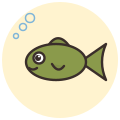
A long, rounded, powerful fish with big scales that have darker edges, giving a net-like pattern. The mouth sits at the tip of the head, the eyes are small and set low, and there are no barbels. The dorsal fin is short.23
Personality what they are like
A calm, steady grazer that spends its time browsing plants in quiet water rather than chasing other fish.21
Daily activity how busy a day looks
Needs plenty of room to cruise as it grows large; it feeds most actively in warm water, and its feeding drops off sharply once the water falls below about 14 °C.23
Grooming and care the hands-on bits
Best suited to large ponds, lakes or reservoirs rather than small garden ponds. In many regions, including several US states, only sterile (triploid) fish may be stocked and a permit is often needed, so check local rules before buying.23
Home where they are happiest
Prefers large, slow-flowing or still water with plenty of vegetation. Copes with water from about 0 to 35 °C and can handle slightly brackish water.12
Food basics what goes in the bowl
Herbivore. Eats large amounts of submerged plants and grasses, and also takes some detritus, insects and other small invertebrates.123
The story where it all began
Grass carp have been farmed for food in China for centuries as part of a traditional mix of pond fish. From the 1960s they were taken to Europe, North America and New Zealand, largely to keep water plants in check, and the first US imports arrived in 1963. Today it is the most heavily farmed fish species in the world.32
Fun facts for the dinner table
- 1
Worldwide farmed production is over five million tonnes a year, the highest of any fish species.3
- 2
A grass carp can reportedly eat up to three times its own body weight in plants in a day.3
- 3
Sterile 'triploid' grass carp are made by giving fertilised eggs a brief shock of heat or cold.2
- 4
Its eggs drift in the current and hatch in only two to three days.1
- 5
It can tolerate water as salty as about 10 parts per thousand.1
Recognised by the official bits
- IUCN Red List
- Assessed as Least Concern (2020)1
- Chinese aquaculture tradition
- One of China's 'Four Great Domestic Fish' raised together in ponds3
The care rhythm Furry Diary remembers it for you
A typical home-care rhythm for a Grass Carp. It is our own starting plan, not a vet's advice, and you can change every line in the app.
- FeedingOnly in the warm seasonevery day
- Pond checkevery day
- Water testevery 2 weeks
- Filter cleanevery month
You might also like
 Common Carp
 Koi
Koi Tench
Tench Golden Orfe
Like what we are building? Buy us a coffee.
The breed atlas is free for everyone, with a source on every fact, and it will never show ads. If it helped you, a small tip keeps the research going. Any amount is lovely, and no is a perfectly fine answer too.
Where this comes from
Every breed page shows where each fact comes from. If we got something wrong, sorry, we are pet people, not a science magazine. Tell us at [email protected] and we will fix it.
- FishBase: Ctenopharyngodon idella fishbase.seused for range, size, age, environment, diet, IUCN status
- USGS Nonindigenous Aquatic Species: Grass carp fact sheet nas.er.usgs.govused for identification, range, US introduction, triploid stocking, feeding temperature
- Wikipedia: Grass carp en.wikipedia.orgused for appearance, size, lifespan, history, production, fun facts
Checked 2026-09-30. Text is written in our own words from these sources.