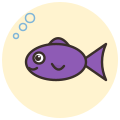
At a glance the quick version
Looks how to spot one
Small, colourful cichlid
A neat, elongated cichlid; males are longer with pointed fins, females are smaller and rounder and show a rich purple-red belly when ready to spawn.23
Personality what they are like
Sociable and community-friendly most of the time, becoming firmly territorial when guarding a nest.2
Daily activity how busy a day looks
Active on the lower levels, digging and exploring around caves and plants.23
Grooming and care the hands-on bits
Provide caves and plants; it digs out nest hollows, so a soft substrate works well.23
Home where they are happiest
Tropical water of about 24 to 27 C, pH roughly 5 to 8 and up to about 12-19 dGH, in at least a 60 cm tank (FishBase suggests 80 cm) for a pair.21
Food basics what goes in the bowl
Takes most foods; cichlid pellets as the staple plus live and frozen foods. Wild fish eat a lot of algae and plant matter.213
Company who they like around
Best as a single pair in a community with small tetras, barbs, danios, rasboras, Corydoras and similar fish.2
The story where it all began
George Boulenger described the species in 1901 as Pelmatochromis pulcher, and it became the type species of Pelvicachromis in 1968. Mixed-up names over the years are why the trade still sells it as 'kribensis'.3
Fun facts for the dinner table
Recognised by the official bits
- IUCN Red List
- Least Concern (assessed 22 April 2019)1
- Taxonomy
- Described by Boulenger in 1901 as Pelmatochromis pulcher; type species of Pelvicachromis (1968)3
The care rhythm Furry Diary remembers it for you
A typical home-care rhythm for a Kribensis. It is our own starting plan, not a vet's advice, and you can change every line in the app.
- FeedingSmall amounts once or twice a dayevery day
- Temperature checkevery day
- Water changeAbout 25% of the waterevery week
- Water testevery week
- Glass cleanevery week
- Filter rinseRinse in old tank water, never tap waterevery month
You might also like
 African Butterfly Cichlid
 Jewel Cichlid
 Agassiz's Dwarf Cichlid
Like what we are building? Buy us a coffee.
The breed atlas is free for everyone, with a source on every fact, and it will never show ads. If it helped you, a small tip keeps the research going. Any amount is lovely, and no is a perfectly fine answer too.
Where this comes from
Every breed page shows where each fact comes from. If we got something wrong, sorry, we are pet people, not a science magazine. Tell us at [email protected] and we will fix it.
- FishBase: Pelvicachromis pulcher fishbase.seused for distribution, size, water parameters, IUCN, wild diet
- Seriously Fish: Pelvicachromis pulcher seriouslyfish.comused for size, water parameters, tank size, diet, behaviour, dimorphism, breeding
- Wikipedia: Pelvicachromis pulcher en.wikipedia.orgused for names, etymology, history, size, colour forms, pH and sex ratio
Checked 2026-09-30. Text is written in our own words from these sources.