At a glance the quick version
Looks how to spot one
Slender, elongated lamprologine cichlid
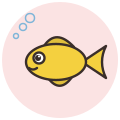
A small, slim cichlid that is often a vivid lemon yellow, though some fish are brown or dark. Males usually end up a little bigger than females.23
Personality what they are like
Fairly calm most of the time but protective and territorial when breeding, and not tolerant of others of its own kind; a single pair works best.2
Daily activity how busy a day looks
Spends much of its time poking around rock crevices and cracks.13
Grooming and care the hands-on bits
Sensitive to poor water quality, so keep the tank mature, clean and stable.2
Home where they are happiest
At least 75 to 80 cm tank for one pair, with plenty of rockwork and caves. Temperature 23 to 27 C, pH 7.5 to 9.0, hardness 8 to 25 dGH.21
Food basics what goes in the bowl
Picks invertebrates from the film on rocks and from crevices. Offer mostly live and frozen foods with some quality dry food and spirulina.12
Company who they like around
Keep as a single pair; young fish raised together pair up more reliably than adults put together. Fits with Tanganyikans that use other areas of the tank.2
The story where it all began
Described by Max Poll in 1956 and named after Narcisse Leleup, a Belgian entomologist who collected the type specimen. Its bright colour has kept it popular in Tanganyika aquariums.31
Fun facts for the dinner table
- 1
Yellow and dark brown fish can live in the same population; dark fish still carry the yellow pigment underneath.2
- 2
The species is named after Belgian entomologist Narcisse Leleup.3
- 3
Both parents care for the eggs in a cave, and a female may lay up to about 150 eggs.2
- 4
It is easy to confuse with its close relative Neolamprologus longior.3
Recognised by the official bits
- IUCN Red List
- Least Concern (assessed 19 February 2025)1
- Taxonomy
- Described by Poll in 19561
The care rhythm Furry Diary remembers it for you
A typical home-care rhythm for a Lemon Cichlid. It is our own starting plan, not a vet's advice, and you can change every line in the app.
- FeedingSmall amounts once or twice a dayevery day
- Temperature checkevery day
- Water changeAbout 25% of the waterevery week
- Water testevery week
- Glass cleanevery week
- Filter rinseRinse in old tank water, never tap waterevery month
You might also like
 Brichardi Cichlid
Like what we are building? Buy us a coffee.
The breed atlas is free for everyone, with a source on every fact, and it will never show ads. If it helped you, a small tip keeps the research going. Any amount is lovely, and no is a perfectly fine answer too.
Where this comes from
Every breed page shows where each fact comes from. If we got something wrong, sorry, we are pet people, not a science magazine. Tell us at [email protected] and we will fix it.
- FishBase: Neolamprologus leleupi fishbase.seused for size, water, diet, IUCN, describer
- Seriously Fish: Neolamprologus leleupi seriouslyfish.comused for care, tank, behaviour, colour forms, breeding
- Wikipedia: Neolamprologus leleupi en.wikipedia.orgused for habitat, etymology, colour forms
Checked 2026-09-30. Text is written in our own words from these sources.