At a glance the quick version
Looks how to spot one
Slender, elongated dottyback
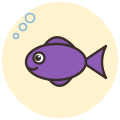
A slim little fish in a vivid orchid purple, often with a darker streak running through the eye. Its body is long and narrow, ideal for slipping into small holes in the reef.23
Personality what they are like
Full of personality. It can be a little shy at first, then becomes a bold, curious resident that keeps an eye on its chosen hiding hole and may chase smaller fish away from it.2
Daily activity how busy a day looks
Starts out hanging close to its shelter and swims more openly around the rockwork once it feels at home.2
Grooming and care the hands-on bits
Give it plenty of small holes and ledges in the rockwork and add it to the tank alongside other dottybacks rather than after them.2
Home where they are happiest
Minimum about 30 US gallons (114 L) with rockwork full of crevices. Saltwater at about 22 to 26 °C (72 to 78 °F), pH 8.1 to 8.4, dKH 8 to 12, specific gravity 1.020 to 1.025.2
Food basics what goes in the bowl
Carnivore. Wild fish hunt zooplankton near ledges; in the aquarium offer a varied mix of meaty foods.21
Company who they like around
Usually kept singly; can share a tank with other dottybacks if they are introduced at the same time.2
The story where it all began
Wolfgang Klausewitz described the species in 1968 and named it after David Fridman of the Maritime Museum in Eilat, Israel, who collected the type specimen. It has since been bred in captivity and is a popular reef aquarium fish.3
Fun facts for the dinner table
- 1
It is found only in the Red Sea.1
- 2
In the wild it lives on vertical rock faces and under overhangs, ducking into small holes for cover, at depths of up to about 60 metres.1
- 3
It is named after David Fridman, who collected the very first specimen near Eilat.3
- 4
It is happy to hunt small pest critters such as bristleworms in a reef aquarium.2
Recognised by the official bits
- IUCN Red List
- Least Concern (assessed 2019)1
The care rhythm Furry Diary remembers it for you
A typical home-care rhythm for a Orchid Dottyback. It is our own starting plan, not a vet's advice, and you can change every line in the app.
- FeedingSmall amounts once or twice a dayevery day
- Temperature checkevery day
- Salinity checkevery week
- Top-upTop up evaporation with fresh RO water, not salt waterevery day
- Water testevery week
- Water changeAbout 10 to 20% of the waterevery 2 weeks
- Glass cleanevery week
You might also like
 Royal Dottyback
 Royal Gramma
Like what we are building? Buy us a coffee.
The breed atlas is free for everyone, with a source on every fact, and it will never show ads. If it helped you, a small tip keeps the research going. Any amount is lovely, and no is a perfectly fine answer too.
Where this comes from
Every breed page shows where each fact comes from. If we got something wrong, sorry, we are pet people, not a science magazine. Tell us at [email protected] and we will fix it.
- FishBase: Pseudochromis fridmani summary fishbase.seused for origin, size, habitat, IUCN
- LiveAquaria: Orchid Dottyback liveaquaria.comused for care, water parameters, tank size, diet, temperament, colour
- Wikipedia: Pseudochromis fridmani en.wikipedia.orgused for history, naming, size, captive breeding
Checked 2026-09-30. Text is written in our own words from these sources.