At a glance the quick version
Looks how to spot one
Small scaled characin (tetra) without an adipose fin
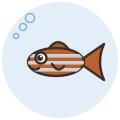
A compact little tetra with a warm coppery-gold body and a dark line running along the rear half of the flank. The tips of the fins are marked with bright silvery-white, which gives the fish its name. Males show richer colour and are slimmer than females.23
Personality what they are like
A bright, busy and peaceful tetra that fits in well with most small community fish. In a proper group its playful energy is spread among its own kind.21
Daily activity how busy a day looks
Very lively; it spends the day darting around the middle of the tank with its shoal and enjoys room to swim.2
Grooming and care the hands-on bits
Easy to look after: clean, stable water with routine partial water changes. Captive-bred stock copes with a broad range of water chemistry.21
Home where they are happiest
Tank of at least 60 x 38 x 30 cm (about 68 litres) for a small shoal. Water 22-28 °C, pH 6.0-8.0, hardness 5-20 °H. A planted tank with open swimming space suits it.21
Food basics what goes in the bowl
Takes most foods readily. Feed small dried flakes and granules together with regular small live or frozen foods such as bloodworm, Daphnia and brine shrimp for best colour.21
Company who they like around
Keep at least 6, ideally 10 or more. Good companions are livebearers, danios, rasboras, other small tetras, Corydoras, gouramis and dwarf cichlids; avoid large predatory fish.21
The story where it all began
Lütken described this fish in 1875 as Tetragonopterus nanus. It was later placed in the genus Hasemania, and a 1938 description by Meinken as Hasemania marginata turned out to be the same species. Today the fish sold in shops are captive-bred.31
Fun facts for the dinner table
Recognised by the official bits
- IUCN Red List
- Least Concern (assessed 7 November 2018)1
- FishBase
- Used commercially in the aquarium trade1
The care rhythm Furry Diary remembers it for you
A typical home-care rhythm for a Silvertip Tetra. It is our own starting plan, not a vet's advice, and you can change every line in the app.
- FeedingSmall amounts once or twice a dayevery day
- Temperature checkevery day
- Water changeAbout 25% of the waterevery week
- Water testevery week
- Glass cleanevery week
- Filter rinseRinse in old tank water, never tap waterevery month
You might also like
 X-ray Tetra
 Glowlight Tetra
 Lemon Tetra
Like what we are building? Buy us a coffee.
The breed atlas is free for everyone, with a source on every fact, and it will never show ads. If it helped you, a small tip keeps the research going. Any amount is lovely, and no is a perfectly fine answer too.
Where this comes from
Every breed page shows where each fact comes from. If we got something wrong, sorry, we are pet people, not a science magazine. Tell us at [email protected] and we will fix it.
- FishBase species summary: Hasemania nana fishbase.seused for describer, maximum length, distribution, water range, IUCN status
- Seriously Fish species profile: Hasemania nana seriouslyfish.comused for aquarium care, water parameters, behaviour, diet, sexing, habitat
- Wikipedia: Hasemania nana en.wikipedia.orgused for taxonomy history, etymology, appearance
Checked 2026-09-30. Text is written in our own words from these sources.