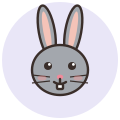
Swiss Fox
Oryctolagus cuniculus
Also called Fuchskaninchen, Schweizer Fuchs, Swiss Fox rabbit
From Switzerland and Germany, 1920s; developed by Hermann Leifer of Coburg and Müller of Zug from Angora stock (English Wikipedia also names Havana). Reached the UK in the early 1980s.1234
At a glance the quick version
Sources vary: Fur & Feather 2.5-3 kg, English Wikipedia 2.5-4 kg, German Wikipedia 3-4 kg, Wikipedia breed list 5-8 lb (2.3-3.6 kg).
Coat and looks how to spot one
long, fine, soft and dense
A compact, medium-sized rabbit with a short neck, upright ears and a long, silky, dense coat that gives it a fluffy fox-like look. Unlike an Angora it has no ear tufts and moults with the seasons.214
Personality what they are like
Calm and affectionate, a good fit for families with older children, and it can learn to use a litter tray.2
Daily activity how busy a day looks
Needs daily time to run, hop and explore, with puzzle feeders, tunnels and toys to keep it busy.5
Grooming and care the hands-on bits
The long coat goes through normal seasonal moults and does not need shearing like an Angora's, but it benefits from regular grooming. Routine care is mostly regular hands-on checks of coat, nails and teeth plus grooming to keep the coat in good order.125
Home where they are happiest
Needs a secure living area of at least 3m x 2m x 1m with room to hop, stretch, play and hide, plus toys, tunnels and foraging chances for enrichment.5
Food basics what goes in the bowl
Plenty of hay forms the base of the diet and keeps the constantly growing teeth worn down, with fresh leafy greens and a measured portion of good-quality pellets. Carrots are best kept as an occasional treat.5
Company who they like around
A sociable animal that is happiest living with at least one other rabbit; the RSPCA usually rehomes rabbits in pairs.5
The story where it all began
In the 1920s Hermann Leifer of Coburg and Müller of Zug crossed Angora-based rabbits hoping to imitate blue fox fur for the fur trade. That goal was never reached, but the long-coated rabbit won a following at European shows and arrived in Britain in the early 1980s.123
Fun facts for the dinner table
- 1
It was bred to imitate fox fur for the fur trade, an aim it never met, yet it became a popular show rabbit instead.1
- 2
English and Dutch speakers call it the Swiss Fox to set it apart from other rabbits once labelled 'fox' breeds.1
- 3
A dwarf version, the Fuchszwerg, weighing only 1.1-1.35 kg, was developed in the late 1970s using Hermelin crosses.1
- 4
Its upright ears are short, around 10.5-11 cm.2
- 5
Since arriving in the UK in the early 1980s it has done consistently well on the show bench.3
Recognised by the official bits
- British Rabbit Council
- Recognised; all colours accepted. Looked after by the Rare Varieties Rabbit Club.3
- ARBA
- Not recognised.2
- German standard
- Shown in Germany from about 1920 and officially recognised in 1962.1
The care rhythm Furry Diary remembers it for you
A typical home-care rhythm for a Swiss Fox. It is our own starting plan, not a vet's advice, and you can change every line in the app.
- BrushingLong wool mats quicklyevery day
- Wool trimevery 8 weeks
- Nail trimevery 6 weeks
- Teeth checkTeeth never stop growingevery week
- Fresh hayUnlimited hay every dayevery day
- Spot cleanevery day
- Full cleanevery week
- Bottom checkCheck the fur around the tail stays clean, especially in summerevery day
- Free roamAt least 4 hours of running space a dayevery day
- VaccinationsSchedule as your vet recommendsas your vet recommends
- Vet check-upevery year
You might also like
 English Angora
 Lionhead
 Jersey Wooly
Like what we are building? Buy us a coffee.
The breed atlas is free for everyone, with a source on every fact, and it will never show ads. If it helped you, a small tip keeps the research going. Any amount is lovely, and no is a perfectly fine answer too.
Where this comes from
Every breed page shows where each fact comes from. If we got something wrong, sorry, we are pet people, not a science magazine. Tell us at [email protected] and we will fix it.
- Fuchskaninchen - Wikipedia (German) de.wikipedia.orgused for breeders, origin, German recognition, weight, coat moult, colours, dwarf variety, naming
- Swiss Fox - Wikipedia en.wikipedia.orgused for origin, parent breeds, weight, coat, colours, ears, temperament, ARBA status
- Swiss Fox - Fur & Feather furandfeather.co.ukused for origin, UK introduction, weight, colours, club
- List of rabbit breeds - Wikipedia en.wikipedia.orgused for weight range, fur type, BRC/ARBA recognition
- Rabbits - RSPCA rspca.org.ukused for general rabbit care: space, diet, companionship, exercise, grooming
Checked 2026-09-30. Text is written in our own words from these sources.