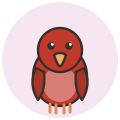
Crimson-bellied Conure
Pyrrhura perlata
Also called Crimson-bellied parakeet, Pyrrhura rhodogaster (former name)
From The southern Amazon basin, from north-eastern Bolivia east into Brazil (Rondonia, Mato Grosso, Amazonas and Para), south of the Amazon River. It lives in lowland rainforest up to about 600 m.12
At a glance the quick version
Looks how to spot one
Feathered; small, colourful Pyrrhura conure with a long tail
A small, richly coloured conure. The head is dark greyish-brown with fine pale flecks, the cheeks shade from green into turquoise blue, and a narrow blue band crosses the nape. The throat and upper chest are grey-blue and scaled, the belly is bright crimson, and the wings are green with blue flight feathers and red under the wing. Young birds have a mostly green belly.1
Personality what they are like
Crimson-bellied conures are lively and playful but have a gentle side, and they tend to trust their people quickly. They are among the quieter conures and mostly get loud only when excited. They can learn a few words, and they love to chew, so they need plenty to keep their beaks busy.32
Daily activity how busy a day looks
An active, busy bird that needs daily out-of-cage time and lots of wooden toys and branches to chew and climb.23
Grooming and care the hands-on bits
Loves to bathe, so offer a bowl or gentle misting often, even daily. Keep plenty of bird-safe chewables available.23
Home where they are happiest
A roomy cage or aviary with plenty of perches and chew toys; the World Parrot Trust suggests a flight at least 2 m long for aviary birds. Keep it somewhere that stays above about 10 C (50 F).23
Food basics what goes in the bowl
Wild birds eat fruit such as figs and Cecropia, catkins and flowers. At home offer pellets, about 30% fruit, vegetables, fresh corn, greens, spray millet and a seed mix.12
Company who they like around
Found in small flocks in the wild, sometimes with other conure species. It is peaceful and can often live alongside other small, calm birds.23
The story where it all began
Johann Baptist von Spix described a bird named Pyrrhura perlata in 1824, but its identity stayed unclear for over a century. In 1983 researchers showed that Spix's specimen was a young crimson-bellied conure, so the species took the older name perlata in place of rhodogaster.1
Fun facts for the dinner table
Recognised by the official bits
- IUCN Red List
- Least Concern (2021 assessment); described as fairly common.1
- CITES
- Appendix II.2
The care rhythm Furry Diary remembers it for you
A typical home-care rhythm for a Crimson-bellied Conure. It is our own starting plan, not a vet's advice, and you can change every line in the app.
- Fresh food and waterevery day
- Cage linerevery 2 days
- Full cleanevery week
- Bath offerevery 3 days
- Nails checkevery month
- Beak checkevery month
- Toy rotationevery week
- Out-of-cage timeAbout 2 hours a dayevery day
- Vet check-upevery year
You might also like
 Maroon-bellied Conure
 Green-cheeked Conure
 Pacific Parrotlet
Like what we are building? Buy us a coffee.
The breed atlas is free for everyone, with a source on every fact, and it will never show ads. If it helped you, a small tip keeps the research going. Any amount is lovely, and no is a perfectly fine answer too.
Where this comes from
Every breed page shows where each fact comes from. If we got something wrong, sorry, we are pet people, not a science magazine. Tell us at [email protected] and we will fix it.
- Crimson-bellied parakeet - Wikipedia en.wikipedia.orgused for range, size, weight, plumage, history, status
- Crimson-bellied Conure - World Parrot Trust parrots.orgused for range, weight, lifespan, care, diet, behaviour
- Crimson-Bellied Conure - Singing Wings Aviary singing-wings-aviary.comused for pet temperament, noise, bathing, temperature, lifespan
Checked 2026-09-30. Text is written in our own words from these sources.