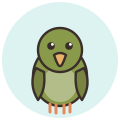
Patagonian Conure
Cyanoliseus patagonus
Also called Burrowing parrot, Burrowing parakeet
From Argentina and Chile. Four subspecies cover central and south-eastern Argentina, north-western Argentina, west-central Argentina and central Chile. It lives in open, dry country and nests in cliffs and banks.12
At a glance the quick version
Figures are for the species as given by Wikipedia; the Chilean subspecies bloxami is larger at about 315-390 g. World Parrot Trust gives 256-281 g for the nominate subspecies.
Looks how to spot one
Feathered; the largest conure, with a long tail
A large olive-brown and green conure with a white ring around the eye and a pale whitish band across the chest. The lower back and rump are yellow, and the middle of the belly and thighs is bright orange-red. Males tend to have a larger red belly patch, and under UV light the sexes differ in feather sheen. Young birds have a pale beak that darkens to black within about six months.13
Personality what they are like
Patagonian conures have a reputation for being gentle, playful and affectionate, and hand-reared birds are usually easy to handle. They can learn some words. They are loud flock birds by nature, and company, stimulation and attention help keep their calling in check.312
Daily activity how busy a day looks
Needs lots of space and regular chances to fly, along with puzzle toys, foraging toys and wood to chew.12
Grooming and care the hands-on bits
Offer baths regularly and provide plenty of bird-safe wood and foraging toys.2
Home where they are happiest
Needs a lot of room. The World Parrot Trust suggests a walk-in aviary around 4.5-7 m long; pet birds kept indoors need a very large cage and daily flight time.21
Food basics what goes in the bowl
Wild birds eat seeds, berries and fruit, with fruit making up most of the diet in summer. At home offer pellets and small seeds with sprouted seeds, boiled maize, cooked beans or rice, and fresh fruit and vegetables.12
Company who they like around
Extremely social; in the wild it lives in large flocks and nests in huge colonies. Pets need plenty of company and affection.23
The story where it all began
Louis Vieillot described the species in 1818 as Psittacus patagonus, and Charles Lucien Bonaparte gave it its own genus, Cyanoliseus, in 1854. Genetic studies suggest the species first arose in Chile and later spread across the Andes into Argentina. Most birds sold today are captive-bred.1
Fun facts for the dinner table
- 1
A 2011 study counted more than 35,000 active nest burrows in a single cliff colony at El Condor, Argentina.2
- 2
It digs nest tunnels up to about 3 m deep into soft cliff faces.1
- 3
Males and females look similar to us, but under ultraviolet light their feathers shine in different colours.1
- 4
The Mapuche people have celebrated the yearly fledging of the young birds with a festival.1
Recognised by the official bits
- IUCN Red List
- Least Concern.2
- CITES
- Appendix II.2
- Taxonomy
- The only species in the genus Cyanoliseus, with four subspecies: patagonus, andinus, conlara and bloxami. The nominate patagonus is the one most often kept.1
The care rhythm Furry Diary remembers it for you
A typical home-care rhythm for a Patagonian Conure. It is our own starting plan, not a vet's advice, and you can change every line in the app.
- Fresh food and waterevery day
- Cage linerevery 2 days
- Full cleanevery week
- Bath offerevery 3 days
- Nails checkevery month
- Beak checkevery month
- Toy rotationevery week
- Out-of-cage timeAbout 2 hours a dayevery day
- Vet check-upevery year
You might also like
 Blue-crowned Conure
 Sun Conure
 Monk Parakeet
Like what we are building? Buy us a coffee.
The breed atlas is free for everyone, with a source on every fact, and it will never show ads. If it helped you, a small tip keeps the research going. Any amount is lovely, and no is a perfectly fine answer too.
Where this comes from
Every breed page shows where each fact comes from. If we got something wrong, sorry, we are pet people, not a science magazine. Tell us at [email protected] and we will fix it.
- Burrowing parrot - Wikipedia en.wikipedia.orgused for range, taxonomy, size, weight, plumage, lifespan, history, facts
- Patagonian Conure - World Parrot Trust parrots.orgused for range, weight, lifespan, care, diet, colony facts, status
- Patagonian Conure Fact Sheet - Northern Parrots northernparrots.comused for temperament, talking, size, beak colour change
Checked 2026-09-30. Text is written in our own words from these sources.