At a glance the quick version
Looks how to spot one
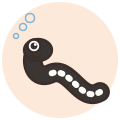
Elongated, weakly electric knifefish
A long, blade-shaped fish with no fin on its back. It moves by rippling one long fin along its belly, and has a short snout and a large mouth.2
Personality what they are like
Peaceful and rather shy with other species, but tends to argue with its own kind. Very small fish may be seen as food.3
Daily activity how busy a day looks
Nocturnal; it hunts at night and likes a dark daytime hideout.12
Grooming and care the hands-on bits
Water about 23-28 C, pH roughly 6.0-8.0 and soft to medium hardness. Strong filtration and regular water changes keep it at its best.13
Home where they are happiest
An adult needs a very large tank, at least 180 x 60 x 60 cm (about 650 litres), with tubes, roots or caves to hide in and a sandy bottom.31
Food basics what goes in the bowl
A carnivore: insect larvae, worms, earthworms, prawns and other live or frozen foods; many learn to accept dried foods too.132
Company who they like around
Best kept alone or as a group only in a very big tank. Good tankmates are peaceful fish over about 15 cm, such as angelfish or calm cichlids.3
The story where it all began
Carl Linnaeus described the species in 1766. In parts of South America local people traditionally linked the fish with spirits of the departed.12
Fun facts for the dinner table
- 1
Its electric organ lets it 'see' in dark or murky water and talk to other knifefish.2
- 2
It shifts its electric frequency to avoid clashing with neighbours, known as a jamming avoidance response.2
- 3
It can regrow a damaged tail, including part of the spinal cord.2
- 4
It has one of the lowest chromosome counts (24) known among bony fish.2
Recognised by the official bits
- IUCN Red List (via FishBase)
- Least Concern (assessed 2020).1
The care rhythm Furry Diary remembers it for you
A typical home-care rhythm for a Black Ghost Knifefish. It is our own starting plan, not a vet's advice, and you can change every line in the app.
- Feedingevery day
- Water changeAbout 30 to 50% of the waterevery week
- Water testevery week
- Filter rinseevery 2 weeks
You might also like
 Clown Knifefish
 Elephantnose Fish
Like what we are building? Buy us a coffee.
The breed atlas is free for everyone, with a source on every fact, and it will never show ads. If it helped you, a small tip keeps the research going. Any amount is lovely, and no is a perfectly fine answer too.
Where this comes from
Every breed page shows where each fact comes from. If we got something wrong, sorry, we are pet people, not a science magazine. Tell us at [email protected] and we will fix it.
- FishBase: Apteronotus albifrons fishbase.seused for size, origin, water parameters, IUCN, diet, history
- Wikipedia: Black ghost knifefish en.wikipedia.orgused for appearance, behaviour, diet, folklore, fun facts
- Seriously Fish: Apteronotus albifrons seriouslyfish.comused for tank size, water parameters, diet, compatibility, hand-feeding
Checked 2026-09-30. Text is written in our own words from these sources.