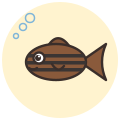
At a glance the quick version
Looks how to spot one
Laterally compressed, weakly electric fish
A slim, flattened fish with a long, flexible trunk-like extension of the chin, a forked tail and two pale stripes towards the rear of the body.2
Personality what they are like
Timid and gentle with other species when it has its own space, but can squabble with others of its kind.23
Daily activity how busy a day looks
Mainly active at night, probing the bottom for worms and insects.13
Grooming and care the hands-on bits
Water about 23-28 C, pH roughly 6.0-7.5 and soft to medium hardness, with very stable, clean conditions.132
Home where they are happiest
At least a 120 x 45 x 45 cm tank (about 240 litres; Wikipedia says over 200 litres), with dim lighting, soft sand for probing, and roots or plants for cover.32
Food basics what goes in the bowl
Worms of all kinds are favourites, especially bloodworms, plus mosquito larvae and other small invertebrates. Many also take frozen and quality dried foods.231
Company who they like around
Do not keep exactly two; keep one, or a group of five or more in a large tank to spread out squabbles. Good companions include African butterflyfish, Congo tetras and Synodontis catfish.31
The story where it all began
Albert Gunther described the species in 1862. Its common name in science honours the German naturalist Wilhelm Peters.12
Fun facts for the dinner table
- 1
Its brain uses a larger share of the body's oxygen than in any other known vertebrate, around 60 percent.2
- 2
The trunk, called the Schnauzenorgan, picks up tiny changes in its electric field to locate prey.2
- 3
It talks to other elephantnose fish using electric pulses.1
- 4
It hears an unusually wide range of sounds for a fish, roughly 100 to 2500 Hz.1
Recognised by the official bits
- IUCN Red List (via FishBase)
- Least Concern (assessed 2019).1
The care rhythm Furry Diary remembers it for you
A typical home-care rhythm for a Elephantnose Fish. It is our own starting plan, not a vet's advice, and you can change every line in the app.
- Feedingevery day
- Water changeAbout 30 to 50% of the waterevery week
- Water testevery week
- Filter rinseevery 2 weeks
You might also like
 African Butterflyfish
 Black Ghost Knifefish
Like what we are building? Buy us a coffee.
The breed atlas is free for everyone, with a source on every fact, and it will never show ads. If it helped you, a small tip keeps the research going. Any amount is lovely, and no is a perfectly fine answer too.
Where this comes from
Every breed page shows where each fact comes from. If we got something wrong, sorry, we are pet people, not a science magazine. Tell us at [email protected] and we will fix it.
- FishBase: Gnathonemus petersii fishbase.seused for size, origin, water parameters, IUCN, diet, hearing and electric facts, history
- Wikipedia: Elephantnose fish en.wikipedia.orgused for other names, appearance, lifespan, care, fun facts
- Seriously Fish: Gnathonemus petersii seriouslyfish.comused for tank size, water parameters, diet, group keeping
Checked 2026-09-30. Text is written in our own words from these sources.