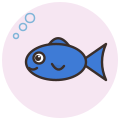
At a glance the quick version
Looks how to spot one
Scaled, streamlined cyprinid
A slender, fast-looking fish with the classic ide outline. The blue form has a bluish or steel-blue back above silvery flanks, setting it apart from both the silver wild type and the orange golden orfe.21
Personality what they are like
Peaceful and sociable. Young fish happily form shoals and they live comfortably with koi and goldfish.13
Daily activity how busy a day looks
A very active swimmer that needs long open stretches of water. It spends much of its time in the upper layer of the pond.13
Grooming and care the hands-on bits
Needs clean, well-oxygenated water, more so than koi or goldfish, so good aeration and filtration matter. Wild ides live at about 4 to 20 C with a pH of about 7.0 to 7.5.13
Home where they are happiest
A pond fish. FishBase advises against home aquariums, noting a tank over 2 m long would be needed, so a large garden pond with open water is the right home.31
Food basics what goes in the bowl
An omnivore that eats insects and their larvae, snails and other small invertebrates plus some plant matter; large adults also take small fish. In ponds it takes floating pond-fish food readily.132
Company who they like around
Keep in a group rather than alone. Juveniles shoal readily, while big adults roam in smaller groups.13
The story where it all began
The ide has a wide range from northern Europe to Siberia and was introduced to Great Britain in 1874. Ornamental orfe were the leading pond fish until koi became widely available in the 1960s. The blue form is a rarer colour variety kept alongside the golden orfe.12
Fun facts for the dinner table
- 1
The ide is one of the most salt-tolerant European whitefish and also lives in brackish coastal waters.2
- 2
A female can lay up to about 100,000 eggs in a spawning season.2
- 3
Orfe were the most popular decorative pond fish in Britain until koi took over in the 1960s.1
- 4
Ides can reach an age of around 29 years.3
Recognised by the official bits
- IUCN Red List
- Wild species Leuciscus idus assessed as Least Concern (22 October 2023)3
- Ornamental trade
- A much rarer ornamental form than the golden orfe1
The care rhythm Furry Diary remembers it for you
A typical home-care rhythm for a Blue Orfe. It is our own starting plan, not a vet's advice, and you can change every line in the app.
- FeedingOnly in the warm seasonevery day
- Pond checkevery day
- Water testevery 2 weeks
- Filter cleanevery month
You might also like
 Golden Orfe
 Koi
Koi Comet Goldfish
 Shubunkin
 Ghost Koi
Like what we are building? Buy us a coffee.
The breed atlas is free for everyone, with a source on every fact, and it will never show ads. If it helped you, a small tip keeps the research going. Any amount is lovely, and no is a perfectly fine answer too.
Where this comes from
Every breed page shows where each fact comes from. If we got something wrong, sorry, we are pet people, not a science magazine. Tell us at [email protected] and we will fix it.
- Wikipedia: Ide (fish) en.wikipedia.orgused for ornamental forms, size, weight, habitat, diet, behaviour, pond keeping, history
- Wikipedia (German): Aland (Fisch) de.wikipedia.orgused for blue colour form, lifespan, size, weight, salt tolerance, spawning
- FishBase: Leuciscus idus fishbase.seused for max length and weight, max age, water parameters, diet, aquarium note, IUCN status
Checked 2026-09-30. Text is written in our own words from these sources.