At a glance the quick version
Adults average 2 to 2.5 cm; maximum about 5 cm standard length.
About one year in the wild, up to two years; can exceed two years in captivity.
Looks how to spot one
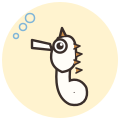
Bony-plated miniature seahorse
One of the smallest seahorses in the world, often only a couple of centimetres tall. Wild fish grow small skin filaments that look like algae for camouflage; these tend to disappear in aquariums. It can change colour to blend in or during courtship.21
Personality what they are like
Peaceful and shy. Pairs stay together through the breeding season and greet each other daily with colour-changing dances that last a few minutes.21
Daily activity how busy a day looks
A daytime animal that moves very little, waiting for food while holding on to plants with its tail.12
Grooming and care the hands-on bits
Rated difficult because it needs a constant supply of tiny live food and very clean water. Use a gentle sponge filter and keep up with frequent small water changes.32
Home where they are happiest
A small species-only tank of about 38 litres (10 US gallons), with plants or Caulerpa to cling to and no strong currents. Water about 20 to 28 °C, pH 8.0 to 8.5, specific gravity 1.020 to 1.025.32
Food basics what goes in the bowl
Freshly hatched baby brine shrimp, copepods and other tiny shrimp larvae, available throughout the day; in the wild it eats amphipods, small shrimp and fish fry.32
Company who they like around
Does best in a group of four or more of its own kind, with no other fish.3
The story where it all began
David Starr Jordan and Charles Gilbert described the species in 1882; its name refers to the Zostera seagrass it lives in. It was a popular mail-order pet in the 1960s and breeds readily in captivity.12
Fun facts for the dinner table
- 1
Guinness World Records lists it as the slowest-moving fish, with a top speed of about 1.5 m per hour.2
- 2
Males carry 3 to 55 eggs for about 10 days before giving birth.2
- 3
It can eat up to around 3,000 brine shrimp a day.2
- 4
Females roam a home range about 100 times larger than a male's.2
- 5
It was widely sold by mail order as a pet in the 1960s.2
Recognised by the official bits
- IUCN Red List
- Least Concern (assessed 3 October 2016)1
- CITES
- Appendix II (all Hippocampus species)2
- Taxonomy
- Family Syngnathidae; described by Jordan and Gilbert in 18821
The care rhythm Furry Diary remembers it for you
A typical home-care rhythm for a Dwarf Seahorse. It is our own starting plan, not a vet's advice, and you can change every line in the app.
- FeedingSmall amounts once or twice a dayevery day
- Temperature checkevery day
- Salinity checkevery week
- Top-upTop up evaporation with fresh RO water, not salt waterevery day
- Water testevery week
- Water changeAbout 10 to 20% of the waterevery 2 weeks
- Glass cleanevery week
You might also like
 Lined Seahorse
 Kuda Seahorse
Like what we are building? Buy us a coffee.
The breed atlas is free for everyone, with a source on every fact, and it will never show ads. If it helped you, a small tip keeps the research going. Any amount is lovely, and no is a perfectly fine answer too.
Where this comes from
Every breed page shows where each fact comes from. If we got something wrong, sorry, we are pet people, not a science magazine. Tell us at [email protected] and we will fix it.
- FishBase: Hippocampus zosterae summary fishbase.seused for distribution, depth, length, age, behaviour, IUCN status
- Wikipedia: Dwarf seahorse en.wikipedia.orgused for description, colours, behaviour, diet, lifespan, reproduction, Guinness record, aquarium notes
- LiveAquaria: Dwarf Seahorse liveaquaria.comused for aquarium care level, tank size, water parameters, diet, group size
Checked 2026-09-30. Text is written in our own words from these sources.