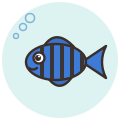
Not furry, but we like them anyway.
Neon Goby
Elacatinus oceanops
Also called Cleaner goby
From Western Central Atlantic, from southern Florida and Texas (USA) south to Belize; on coral heads of reefs at about 1 to 45 m1
At a glance the quick version
Looks how to spot one
Small torpedo-shaped goby
A slim, torpedo-shaped little goby with a dark back and a glowing electric-blue stripe running from snout to tail, set off by a pale stripe in front of each eye.12
Personality what they are like
Peaceful and busy. It sets up a cleaning station and invites other fish over to be groomed, and it lives happily in a bonded male and female pair.123
Daily activity how busy a day looks
An active perching fish that zig-zags near its station on rocks or coral heads to advertise its cleaning service.21
Grooming and care the hands-on bits
Described as extremely hardy and suitable for beginners. Keep water stable and clean, and acclimate slowly over a few hours. Avoid large predatory tank mates.32
Home where they are happiest
A reef aquarium from about 40 litres (10 US gallons), or around 75 litres (20 US gallons) for spawning pairs, with live rock for perching. Suggested water: 22 to 26 C (72 to 78 F), pH 8.1 to 8.4. Reef, coral and invertebrate safe.31
Food basics what goes in the bowl
A carnivore that picks parasites off other fish in the wild and also takes copepods and zooplankton. In the aquarium offer small meaty foods such as mysis, copepods and small pellets or flakes.213
Company who they like around
Socially monogamous; pairs stay together at their cleaning station. Keep singly or as a pair.12
The story where it all began
The neon goby was described by the American ichthyologist David Starr Jordan in 1904. It is the best-known of the Caribbean cleaning gobies and has been bred successfully in captivity, which makes captive-raised fish easy to find.12
Fun facts for the dinner table
- 1
Neon gobies run cleaning stations on coral heads, removing parasites from the skin, fins, mouths and even gill chambers of much bigger fish such as groupers.1
- 2
To attract customers they perform a zig-zag swimming dance in front of their station.2
- 3
Their bright blue stripe acts as a signal that says 'cleaner, not food', helping them work safely around predators.2
- 4
After hatching, the larvae drift for about 30 days before they settle and turn into juveniles.2
Recognised by the official bits
- IUCN Red List
- Least Concern (assessed 1 March 2010)1
- Taxonomy
- Described by David Starr Jordan in 19041
The care rhythm Furry Diary remembers it for you
A typical home-care rhythm for a Neon Goby. It is our own starting plan, not a vet's advice, and you can change every line in the app.
- FeedingSmall amounts once or twice a dayevery day
- Temperature checkevery day
- Salinity checkevery week
- Top-upTop up evaporation with fresh RO water, not salt waterevery day
- Water testevery week
- Water changeAbout 10 to 20% of the waterevery 2 weeks
- Glass cleanevery week
You might also like
 Yellow Clown Goby
 Citron Clown Goby
Like what we are building? Buy us a coffee.
The breed atlas is free for everyone, with a source on every fact, and it will never show ads. If it helped you, a small tip keeps the research going. Any amount is lovely, and no is a perfectly fine answer too.
Where this comes from
Every breed page shows where each fact comes from. If we got something wrong, sorry, we are pet people, not a science magazine. Tell us at [email protected] and we will fix it.
- FishBase: Elacatinus oceanops fishbase.seused for range, size, depth, describer, colour pattern, cleaning, monogamy, IUCN
- Wikipedia: Neon goby (genus Elacatinus) en.wikipedia.orgused for cleaning behaviour, diet, reproduction, colour signal, aquarium notes
- Saltwaterfish.com: Neon Goby saltwaterfish.comused for aquarium care, tank size, water parameters, diet
Checked 2026-09-30. Text is written in our own words from these sources.