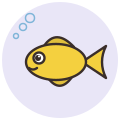
Not furry, but we like them anyway.
Yellow Clown Goby
Gobiodon okinawae
Also called Okinawa goby, Yellow coral goby
From Western Pacific, from southern Japan (including Okinawa) south to the Rowley Shoals and the southern Great Barrier Reef, also Palau and the Marshall Islands; among branching Acropora corals in sheltered lagoons at about 2 to 15 m12
At a glance the quick version
Looks how to spot one
Small coral goby
A tiny, compact goby that is almost entirely bright lemon yellow, with a pale whitish patch on each cheek. Unlike its cousin the citron goby it has no blue lines on the face.2
Personality what they are like
Peaceful and gentle with other species, though it will guard its chosen coral perch from other yellow clown gobies.23
Daily activity how busy a day looks
Not a big swimmer. It spends most of its time perched in or hovering just above coral branches, darting out to grab passing food.12
Grooming and care the hands-on bits
Rated easy care. Keep a tight lid to prevent escapes and provide stable reef conditions with low to moderate water flow.3
Home where they are happiest
A small reef aquarium from about 40 litres (10 US gallons) with live rock and, ideally, branching corals to perch in. Suggested water: 23 to 26 C (74 to 78 F), pH 8.1 to 8.4, specific gravity 1.023 to 1.025. Reef safe.32
Food basics what goes in the bowl
A planktivore that snaps up tiny drifting animals. In the aquarium offer a varied menu of small frozen and live foods such as mysis and brine shrimp and copepods; some individuals are slow to take flakes or pellets.23
Company who they like around
In the wild it lives in small groups of about 5 to 15 among coral branches. In an aquarium a single fish or a pair is the usual choice, since they defend their perch from others of their kind.123
The story where it all began
The species takes its name from Okinawa in southern Japan, part of its western Pacific range. It has become one of the most popular small gobies for nano reef aquariums thanks to its colour and modest size.21
Fun facts for the dinner table
- 1
It lives among the branches of staghorn Acropora corals and rests on them instead of on the seabed like most gobies.1
- 2
It can breathe air for short periods, a handy trick when its shallow coral home is briefly exposed.1
- 3
Its skin carries a bitter-tasting mucus that makes it unappetising to predators.2
- 4
It can change sex in either direction to form a pair, and the male guards the ring of eggs for around five days until they hatch.2
Recognised by the official bits
- IUCN Red List
- Least Concern (assessed 28 June 2018)1
The care rhythm Furry Diary remembers it for you
A typical home-care rhythm for a Yellow Clown Goby. It is our own starting plan, not a vet's advice, and you can change every line in the app.
- FeedingSmall amounts once or twice a dayevery day
- Temperature checkevery day
- Salinity checkevery week
- Top-upTop up evaporation with fresh RO water, not salt waterevery day
- Water testevery week
- Water changeAbout 10 to 20% of the waterevery 2 weeks
- Glass cleanevery week
You might also like
 Citron Clown Goby
 Neon Goby
Like what we are building? Buy us a coffee.
The breed atlas is free for everyone, with a source on every fact, and it will never show ads. If it helped you, a small tip keeps the research going. Any amount is lovely, and no is a perfectly fine answer too.
Where this comes from
Every breed page shows where each fact comes from. If we got something wrong, sorry, we are pet people, not a science magazine. Tell us at [email protected] and we will fix it.
- FishBase: Gobiodon okinawae fishbase.seused for range, size, depth, coral habitat, groups, air breathing, IUCN
- Wikipedia: Gobiodon okinawae en.wikipedia.orgused for description, behaviour, diet, reproduction, aquarium notes
- Saltwaterfish.com: Yellow Clown Goby saltwaterfish.comused for aquarium care, tank size, water parameters, lifespan
Checked 2026-09-30. Text is written in our own words from these sources.