At a glance the quick version
Looks how to spot one
Tiny nano characin
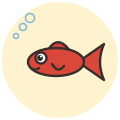
A very small, slightly deep-bodied tetra whose whole body glows a ruby red in its home waters. Males stay a little smaller and carry the stronger colour, while females look rounder when carrying eggs. The red can look paler in aquarium fish.132
Personality what they are like
A gentle little shoaling fish that keeps to itself around other species. Males may claim small patches of the tank and posture at each other, which is part of their normal display.1
Daily activity how busy a day looks
Moderately active; spends its time shoaling and exploring among plants.1
Grooming and care the hands-on bits
Thrives in very soft, acidic, clean water; keep conditions stable with small regular water changes.12
Home where they are happiest
A tank with a footprint of at least 60 x 30 cm (about 54 litres), well planted with gentle flow. Water 20-28 C (FishBase gives 20-26 C), pH about 4.0-6.5 (up to 7.0 per FishBase), and soft water up to roughly 5-8 dGH.12
Food basics what goes in the bowl
A micropredator of tiny invertebrates. Offer fine dry foods along with small live or frozen foods such as baby brine shrimp, Daphnia and grindal worms.1
Company who they like around
Keep a group of at least 8-10. Best with other very small, calm species that suit the same soft, acidic water.1
The story where it all began
The ruby tetra was described by French ichthyologist Jacques Gery in the mid-1960s (sources give 1965 or 1966). Its names honour two people who helped collect the first specimens: publisher and aquarist Herbert R. Axelrod and fish exporter William Riese.32
Fun facts for the dinner table
- 1
At around 2 cm long, it is one of the smallest tetras kept in aquariums.1
- 2
The genus name honours Herbert R. Axelrod and the species name honours exporter William Riese, both involved in collecting the type specimen.2
- 3
Rival males set up tiny territories inside the shoal and show off to each other.1
- 4
It is less often seen in shops than its relatives, probably because its natural range is remote and small.1
Recognised by the official bits
- IUCN Red List
- Assessed as Least Concern (March 2021)2
- FishBase
- Listed as of commercial interest in the aquarium trade2
The care rhythm Furry Diary remembers it for you
A typical home-care rhythm for a Ruby Tetra. It is our own starting plan, not a vet's advice, and you can change every line in the app.
- FeedingSmall amounts once or twice a dayevery day
- Temperature checkevery day
- Water changeAbout 25% of the waterevery week
- Water testevery week
- Glass cleanevery week
- Filter rinseRinse in old tank water, never tap waterevery month
You might also like
 Ember Tetra
 Green Neon Tetra
Like what we are building? Buy us a coffee.
The breed atlas is free for everyone, with a source on every fact, and it will never show ads. If it helped you, a small tip keeps the research going. Any amount is lovely, and no is a perfectly fine answer too.
Where this comes from
Every breed page shows where each fact comes from. If we got something wrong, sorry, we are pet people, not a science magazine. Tell us at [email protected] and we will fix it.
- Axelrodia riesei, Seriously Fish seriouslyfish.comused for origin, size, tank and water parameters, diet, behaviour, appearance
- Axelrodia riesei, FishBase fishbase.seused for distribution, length, water parameters, IUCN status, etymology
- Ruby tetra, Wikipedia en.wikipedia.orgused for range, length, colour, history and naming
Checked 2026-09-30. Text is written in our own words from these sources.