At a glance the quick version
Females 6.5-9.8 cm long, males 5.5-6.8 cm.
Adult stage only: males up to about 4 months, females usually 6-9 months and occasionally a year.
Looks how to spot one
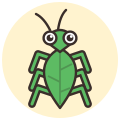
Flat, leaf-shaped exoskeleton
A wide, flat insect shaped like a leaf, with leafy flaps on the legs. Females are broad with only forewings; males are narrower with full hind wings and can make short flights.2
Personality what they are like
Very peaceful. It spends the day sitting still on its food plant and sways gently when it moves, like a leaf in the wind. Adult males wander at night looking for females.2
Daily activity how busy a day looks
Low. Mostly motionless by day; tiny nymphs run about briefly after hatching before they settle to feed.2
Grooming and care the hands-on bits
No grooming. Keep fresh food plants available and mist them with lukewarm water every 2-3 days. Handle gently, as they can drop legs if grabbed.2
Home where they are happiest
A well-ventilated enclosure kept at about 22-27 C and 60-80% humidity, tall enough for hanging moults.23
Food basics what goes in the bowl
Mainly bramble (blackberry) leaves; oak and guava are also accepted.2
Company who they like around
Can live in groups in a roomy enclosure with plenty of food plants.2
The story where it all began
Leaf insects from the Philippines were bred by hobbyists for years under a placeholder name. The species was officially described in 2009, and today's captive lines trace back to animals collected in Zambales around 2000-2001.21
Fun facts for the dinner table
Recognised by the official bits
- Taxonomy (via Wikipedia)
- Formally described in 2009 by Hennemann, Conle, Gottardo and Bresseel in Zootaxa. Earlier kept in the hobby as Phyllium sp. (Philippines) under PSG number 278.2
The care rhythm Furry Diary remembers it for you
A typical home-care rhythm for a Philippine Leaf Insect. It is our own starting plan, not a vet's advice, and you can change every line in the app.
- Humidity checkevery 2 days
- Water dishevery 2 days
- FeedingDepends on species, size and moult stagevaries
- Spot cleanRemove leftover foodevery week
- Moult noteLeave them in peace while moulting and note it in the diaryvaries
- Substrate changeevery 6 months
You might also like
 Giant Prickly Stick Insect
 Jungle Nymph Stick Insect
 Indian Stick Insect
Like what we are building? Buy Archy a bone.
All of this is free for everyone, with a source on every fact, and it will never show ads. It was a big job to build, so if it helped you, buy Archy a bone. Any amount is lovely, and no is a perfectly fine answer too.
Archy is our Australian Cattle Dog and chief taste tester. Tips go to 4V3D OÜ, the small family studio behind Furry Diary.
Where this comes from
Every breed page shows where each fact comes from. If we got something wrong, sorry, we are pet people, not a science magazine. Tell us at [email protected] and we will fix it.
- Phyllium philippinicum - Wikipedia en.wikipedia.orgused for description history, range
- Phyllium philippinicum - German Wikipedia de.wikipedia.orgused for size, colours, behaviour, care, eggs, lifespan, history, fun facts
- Stick insect care sheet - Amateur Entomologists' Society amentsoc.orgused for general enclosure guidance
Checked 2026-09-30. Text is written in our own words from these sources.